
The careers people remember most are rarely shaped by salaries, degrees, or job titles. They are defined by quiet moments of humanity — when someone chose empathy over rules, when a colleague showed up without being asked, or when a simple act of kindness changed the course of a life at work.
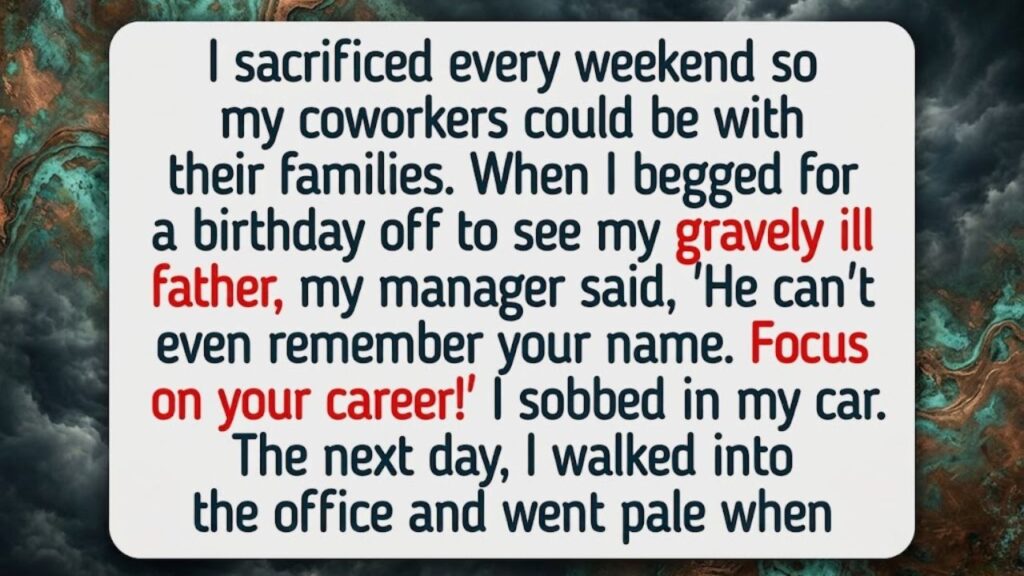
I spent nearly every weekend for two years covering shifts so my coworkers could be with their families. I never complained or kept count. When I finally asked for one day off — my birthday — to visit my seriously ill father, my manager dismissed it and told me to focus on work. I sat in my car and cried. The next morning, I returned to find my desk covered in flowers. My team stood there with a handwritten card: “Go see your dad. We’ve got everything covered.” They had rearranged the entire schedule themselves. That day, they gave me something no authority figure had — permission to be human. It was the last birthday I spent with my father.
On another occasion, our team made a serious mistake on a client project — one that could have cost jobs. During the review, our manager stepped forward and took full responsibility, even though the fault was shared. Later, he simply said, “You’re still learning. I’m not.” That moment didn’t just protect us — it built a level of trust and loyalty that lasted for years.

When a colleague retired after thirty years, she didn’t give a routine farewell. Instead, she brought a handwritten document listing every person who had impacted her journey — with names, memories, and gratitude. It reached the CEO, who shared it with everyone mentioned. Many of them had never been acknowledged like that before. Her final act was making sure people felt seen.
In fifteen years of working, I had never heard a senior leader admit fault directly — until one day when a manager called me in, closed the door, and said, “I was wrong, and I owe you an apology.” There was no justification, no explanation — just honesty. It completely reshaped how I handle my own mistakes.
Early in my career, I expected routine feedback during a review. Instead, my supervisor handed me a note that said, “You’re far better at this than you think. Start believing it.” I kept that paper. It was simple, but it changed my confidence in ways nothing else had.

Our receptionist, Maria, never held a senior title or managed a team, but she remembered everyone’s birthdays, small preferences, and difficult days. She created a sense of belonging for everyone. When she retired, even the CEO admitted that hiring her was one of his best decisions. Her impact went far beyond any formal role.

During a promotion announcement, one employee — clearly the strongest candidate — was passed over. Instead of staying silent, she stood up and publicly supported another colleague who deserved it. Months later, leadership changed, and both of them were promoted together. Sometimes, advocating for others is the highest form of integrity.
I once waited anxiously for a response after interviewing for a dream role. When the rejection came, the hiring manager stayed on the call, offering detailed feedback and encouragement. Months later, she reached out again with another opportunity and hired me. That extra time she gave me changed everything.
After being laid off, I expected generic farewell responses. Instead, one colleague sent a long, thoughtful message highlighting specific contributions I had made and why he believed in me. Reading it made an incredibly difficult day bearable. Since then, I’ve tried to do the same for others.
Once, after a poor interview, the interviewer followed me out and quietly said, “You’re qualified, but you don’t seem to believe that. Work on it.” I didn’t get that job, but I got the next one — because of that one honest moment.
Kindness at work is often underestimated. But in reality, it is one of the strongest forces shaping careers, teams, and cultures. It doesn’t require authority or position — just intention. And its impact lasts far longer than any title ever could.
