The Independent Communications Authority of South Africa (ICASA) has published regulations to regulate Digital Terrestrial Television (DTT) Broadcasting in anticipation of the analogue switchover in South Africa.

In an announcement published in the Government Gazette on Thursday, ICASA also noted that there is still an unknown timeframe for the analogue switchover, but that legal preparations have begun to ensure that there is appropriate information when that time comes.
“The purpose of these regulations is to provide a regulatory framework for Digital Terrestrial Television after the analogue switchover,” said ICASA.

“With no analogue switchover date yet, ICASA’s aim is to look ahead.”
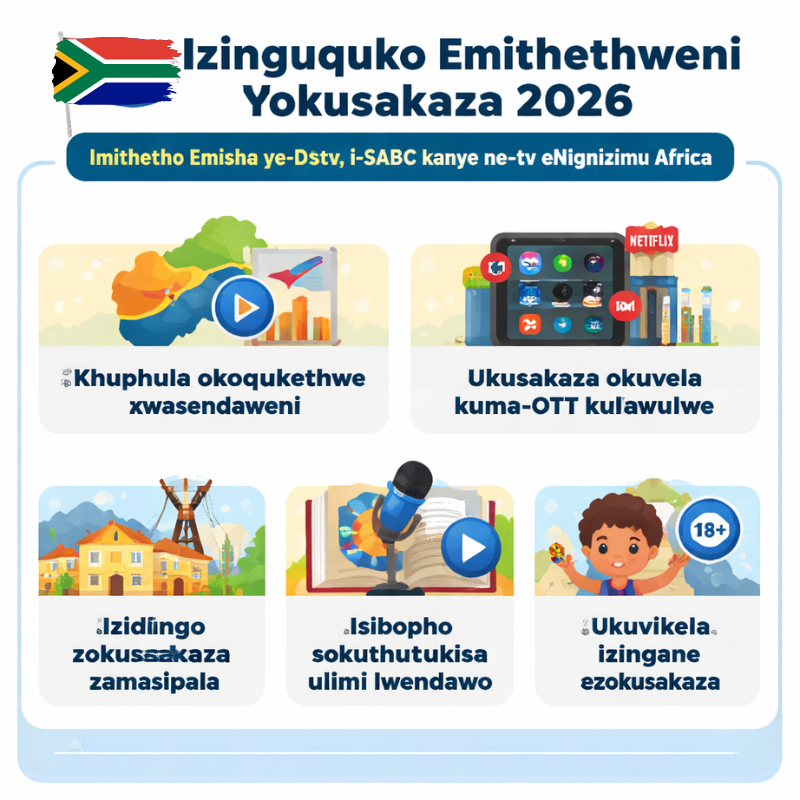
Key Indicators of Regulatory Principles
The regulations seek to regulate areas within the DTT Broadcast multiplexes sector between the 470Mhz to 694Mhz band, which includes seven DTT Broadcasting multiplexes in South Africa.
The rules prescribe the conditions that will apply to the allocation of power in the multiplex.
The regulations prescribe the procedure for submitting applications for permission to broadcast digital television channels in multiplexes.
The principles write the procedures for multiplex operation through the Multiplex Operator.
The regulations prescribe the procedures for the provision of Signal Distributor.
Multiplex Operator and Problems Occurring
A multiplex is a digital container that carries multiple television channels, radio stations, and data services on a single radio frequency channel.
The regulations empower the Multiplex Provider to manage and access multiplex capacity options and to establish and manage a DTT transmission network.
“This proposal is supported to include narrow federal space for Single Frequency Networks (SFNs) and Multi Frequency Networks (MFNs),” ICASA explained.

Providing Power to Various Services
The regulations governing DTT multiplexes divide power between broadcasting services, including public, public, free, and private services.
Multiplex 1 and 5 were built for the broadcasting company, the South African Broadcasting Corporation (SABC).
Multiplex 2 is reserved mostly for commercial broadcasters, with ten different pay-outs recorded, where 80% of the spectrum allocation occurs.
Multiplex 3 will be powered between free-to-air broadcasters, with some contributing 55% and others requesting 45%.
Multiplex 4 will be dedicated to private broadcasting services, while Multiplex 6 will be fully dedicated to all public services that remain in its vicinity.
Multiplex 7, finally, will be fully dedicated to “future innovation” programs, where there will be content activities.
Performance Requirements and Penalties
The regulations also provide general obligations for publishers, including the need to provide relevant program reminders.
Regarding electronic program information, publishers must ensure that viewers receive information about the type and content of programs on a given product.
ICASA also explains that publishers of Terrestrial Television sites agree to publish multi-channel broadcasting services in the event that there is a constant shortage of analogue broadcast signals.
The severe penalties stipulate that publishers who fail to comply with certain rules within the Electronic Communications Act will face a fine of more than R500,000 per day if they fail.
ICASA will publish public announcements confirming the end of dual illumination delays, or the simultaneous transmission of analogue and digital signals, in the future.