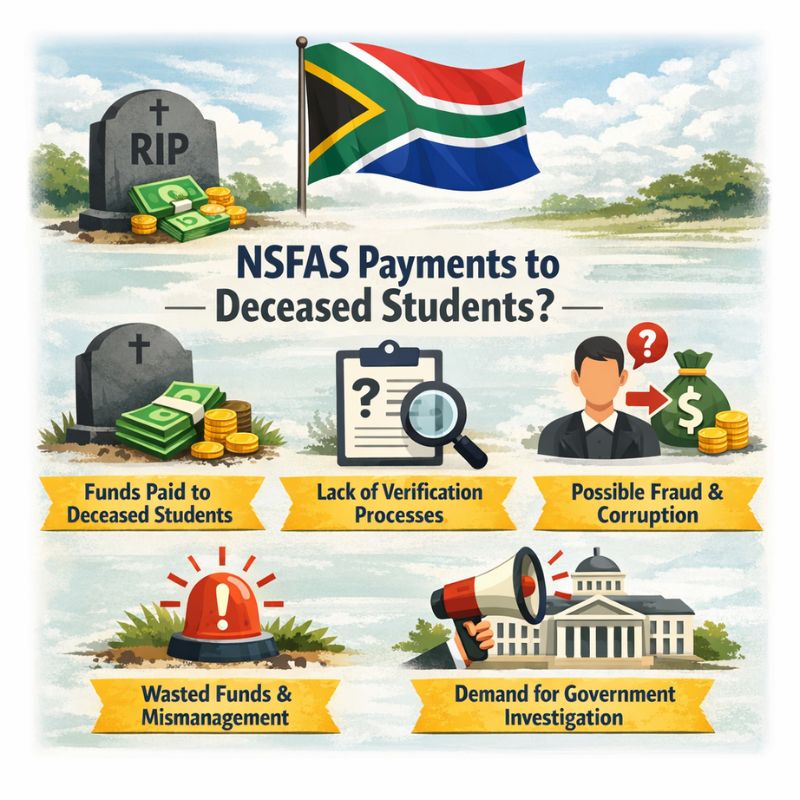
The issue of NSFAS payments going to students who have died has caused a lot of worry across South Africa. It raises serious questions about how the student funding system is run and who is responsible for it. The National Student Financial Aid Scheme (NSFAS) is meant to help students who are having trouble paying for school, but recent reports say that payments have continued even after some of the people who got them died. Because of this, student unions and advocacy groups are calling for an immediate government investigation. They are worried about possible administrative mistakes and the risk of misusing public funds that are meant to help students with their education.

NSFAS Payments to Dead Students Are Very Worrying
The fact that NSFAS is still sending money to dead students has raised concerns among people who work in South Africa’s education system. Some people say that this shows problems with data verification systems and weak administrative oversight processes. Many people think that these mistakes have continued because institutions and government databases don’t work together well enough. Student groups are now asking for “financial accountability measures” to stop this from happening again. Also, worries about “public fund misuse” have grown stronger because taxpayers want to know how education funds are spent and watched. Fixing these problems is very important for getting people to trust the NSFAS system again.

Student Union Calls for Investigation into NSFAS Payment Problems
Student unions all over South Africa have taken a strong stand, calling on the government to look into NSFAS payment problems. They stress the need for immediate government action to find out how these differences went unnoticed. Union leaders say that the problem shows problems with “student record management” and slow updates in official databases. There are also calls for transparent audit procedures to find out who is to blame and stop similar things from happening again. A lot of students are worried that these problems could affect real beneficiaries, which is why “fund distribution fairness” is such a big issue in the ongoing debate.

How the Government Dealt with the NSFAS Payment Problem for Dead Students
The South African government has said that it understands the worries about NSFAS payments to dead students and has promised to look into the issue fully. Officials have said that problems with outdated beneficiary tracking systems and poor communication between departments may have played a role. People are now working to make “real-time data updates” stronger and “verification mechanisms” better across all institutions. While officials work to fix the problem, stakeholders stress the need for long-term changes to keep the funding system honest and protect deserving students from mistakes made by the administration.
Looking into the NSFAS Payment Controversy
The debate over NSFAS payments to dead students shows that there are bigger problems with South Africa’s system for funding students. Experts say that better digital record integration between departments could cut down on these kinds of mistakes by a lot. Also, using automated validation checks might help find inconsistencies early on. The situation also shows how important it is to have consistent monitoring and “institutional accountability standards.” To get people to trust NSFAS again, we need to do more than just fix things right away. We also need to promise to make long-term changes to how we run things that put transparency and efficiency first when it comes to managing public education funds.
Frequently Asked Questions (FAQs)
1. What is NSFAS?
The South African government runs NSFAS, which gives money to students who qualify.
2. Why are payments to students who have died a problem?
 8 Quiet Kindness Moments Showing How Small Compassionate Acts Can Create Lasting Happiness
They show mistakes made by the government and possible misuse of public money.
3. What is being asked for?
Student unions are asking the government to look into this right away and make changes to the system.
4. What can be done to stop this from happening again?
Improved data systems, regular audits, and better coordination between departments can help stop these kinds of mistakes.